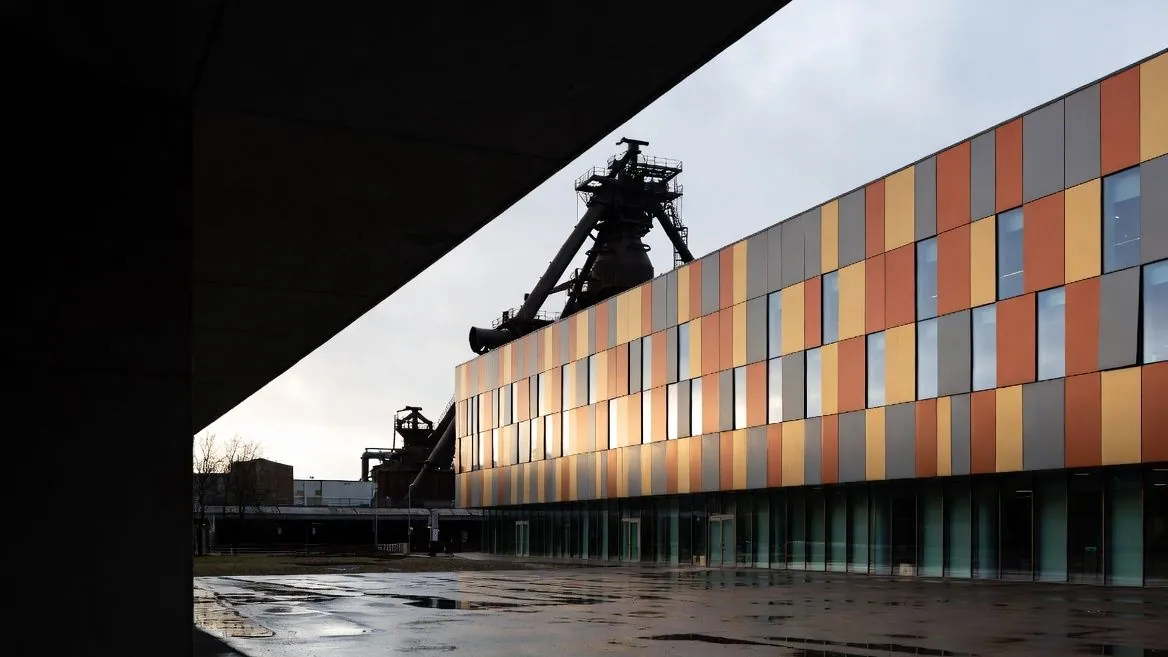
Visible fixing · Stainless screws
Classic, economical and demountable solution. Anodised aluminium screw heads matched to panel. Expansion joints mandatory every 600 mm. DTU 41.2 compliant.

Trespa Meteon, Fundermax Max Exterior, Rockpanel — HPL compact panels offer 30+ years durability, 1,200+ decors and unmatched UV, impact and graffiti resistance. QUASART installs and specifies in Luxembourg and the Greater Region.
HPL stands for High Pressure Laminate. Kraft paper sheets impregnated with phenolic resin, compressed at over 70 bar and 150 °C. The result: a panel with a density of 1.35 g/cm³, harder than most woods, resistant to UV, water, impacts and graffiti. HPL is not a coating — it is an aesthetic armour.
QUASART, based in Crauthem (L-3327), works with the three European leaders — Trespa (Netherlands), Fundermax (Austria) and Rockpanel (Netherlands). Over 1,200 decors available: plains, photorealistic wood, polished concrete, natural stone, brushed metal. Custom CNC cutting. Visible fixing, hidden fixing or structural bonding.
HPL panels exist in finishes that no other facade material can match — from polished concrete to brushed metal to photorealistic wood.
 Pure
Pure Deep
Deep Polished
 Oak
Oak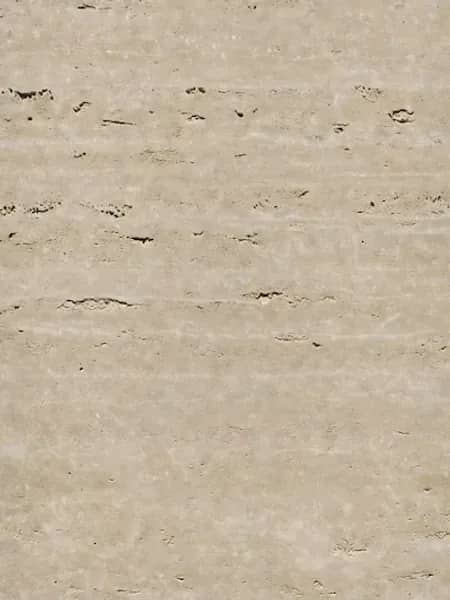 Natural
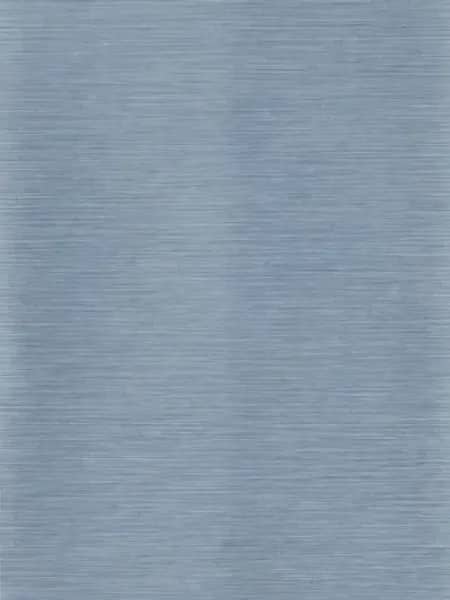 Metallic
QUASART works with the European leaders in compact HPL. Each manufacturer has its positioning, decors and certifications.
The absolute reference in HPL facades. Meteon range with homogeneous co-pressed surface layer — no applied coating, incomparable UV and graffiti resistance. Made in the Netherlands.
Austrian compact HPL expert since 1897. Max Exterior range developed for ventilated facades — UV resistance tested over 25 years, 180-colour palette. Integrated AGT anti-graffiti technology.
The compressed rock wool solution. Non-combustible class A2, unique heat and impact resistance. Ideal for public buildings, high-risk buildings and projects requiring the best fire performance.
Historic Italian manufacturer (1957). MEG range specially designed for ventilated facades — metallic finishes, mirror effects and exclusive textures. Highly valued by architects for aesthetics-first projects.
Classic, economical and demountable solution. Anodised aluminium screw heads matched to panel. Expansion joints mandatory every 600 mm. DTU 41.2 compliant.
Metal clips on aluminium subframe — perfectly smooth facade, no visible screws. Allows individual panel replacement. Recommended for architectural projects.
High-performance structural silicone on aluminium profiles. Result: monolithic facade with no visible metallic element. Strict surface preparation and quality control. Irreversible.
For complex geometries, curved facades or partial replacement situations — QUASART adapts the fixing system to the context with manufacturer-validated hybrid solutions.
Thermal expansion is the critical parameter for HPL — precise layout planning is non-negotiable.
Layout plan to the mm integrating expansion joints (8-12 mm), corner junctions and window cut-outs. Validated with the architect before panel ordering.
Before ordering · Non-negotiableT or L aluminium profiles, fixed to masonry or load-bearing structure. Ventilated air gap 20 mm minimum. Load calculation per Eurocode and DTU 41.2.
Alu · 20 mm · EurocodeWorkshop cutting on CNC machine — freeform shapes, perforations, engraving. Precision to 1/10 mm. Edges machined or protected with touch-up paint.
CNC · 1/10 mm · Protected edgesExpansion ~0.05 mm/m·°C. On a 3 m panel, expansion reaches 7.5 mm between -10 °C and +40 °C. Fixings must allow free panel movement.
ΔL 7.5 mm/3 m · Sliding fixingEvery QUASART installation complies with current European and local standards — from fire classification to subframe rules.
European standard defining the physical and mechanical properties of compact HPL panels. Classification by grade and thickness.
Euroclass B-s1,d0 for standard HPL, A2 for Rockpanel. Determines use in public and high-rise buildings.
French Technical Document applicable to HPL panels in ventilated facades — subframe, fixings, joints, minimum 20 mm air gap.
European approval specific to lightweight facade systems — basis for CE certifications for HPL fixings and subframes.
Plastics density measurement standard — guarantees compact HPL density ≥ 1.35 g/cm³ per manufacturer specifications.
HPL panels in ventilated facades are compatible with RE 2020 (France) and GPE (Luxembourg) — Ug values and thermal bridges integrated in calculation.
Facilities subject to the strictest fire regulations. Rockpanel A2 or Trespa B-s1,d0. Impact and graffiti resistance essential.
Trespa Meteon on premium residences — concrete, stone or photorealistic wood decor finishes with HPL durability. Facades compliant 30 years after handover.
Headquarters facades, business parks — impeccable corporate image without intensive maintenance. Fundermax Max Exterior for long runs.
Replacing ageing cladding — corroded metal, cracked render, asbestos fibre cement — with a ventilated HPL system. Long-term solution, zero maintenance.
We had specified Trespa Meteon on both buildings. QUASART provided us with the layout plan with expansion joints to the millimetre before we even signed. That is what a true HPL specialist looks like.Lead architect — Mixed-use programme, Esch-sur-Alzette
The real questions asked by architects, developers and clients
Trespa Meteon: high-end reference, co-pressed surface layer, maximum UV/graffiti resistance, photorealistic decors. Premium price. Fundermax Max Exterior: optimal quality/price ratio, 180 colours, AGT anti-graffiti treatment. Rockpanel: only true non-combustible (rock wool, class A2) — essential for category 1 public buildings. The choice depends on your fire regulation, budget and desired decors.
Yes, systematically. HPL panels expand ~0.05 mm/m per degree Celsius. On a summer day in Luxembourg (ΔT 50 °C), a 1.2 m panel expands by 3 mm. Without joints, the panel buckles or cracks within 2 to 5 years. QUASART integrates expansion joints in the layout plan from the quotation stage.
30 to 50 years under normal conditions. Manufacturers guarantee their panels against discolouration and delamination for 10 to 25 years depending on range. An HPL correctly installed by QUASART per DTU 41.2 requires zero maintenance for 30 years.
Yes. HPL is installed on an aluminium or timber subframe fixed to the supporting wall, with or without insulation. For renovation with thermal improvement (RE 2020 / GPE), insulation is fitted between battens. QUASART carries out a structural and thermal survey before quotation.
Yes — it is one of the main reasons for their specification on public buildings. The HPL surface (especially Trespa Meteon and Fundermax AGT) is impervious to spray paint solvents. High-pressure cleaning is sufficient in 90% of cases — the graffiti comes off without residue.
Compact HPL is a thermoset — not recyclable at end of life. Its environmental balance improves with lifespan: an HPL lasting 40 years has a much lower annual carbon footprint than PVC cladding replaced every 15 years. Trespa offers panels with recycled fibres (NFC range). Rockpanel uses natural rock wool.