Exposed fixing — stainless steel screw + washer
The classic solution on a timber or aluminium subframe. A4 stainless steel screws with EPDM sealing washers. Regular fixing grid, individual panels easy to replace. Economical for long runs.

EQUITONE, RIEDER, ETERNIT, CEDRAL, SWISSPEARL — the world benchmarks for fibre cement panels. Non-combustible, rot-proof, with a near-limitless design palette. QUASART installs and specifies in Luxembourg, Moselle, Meurthe-et-Moselle and the Belgian province of Luxembourg.
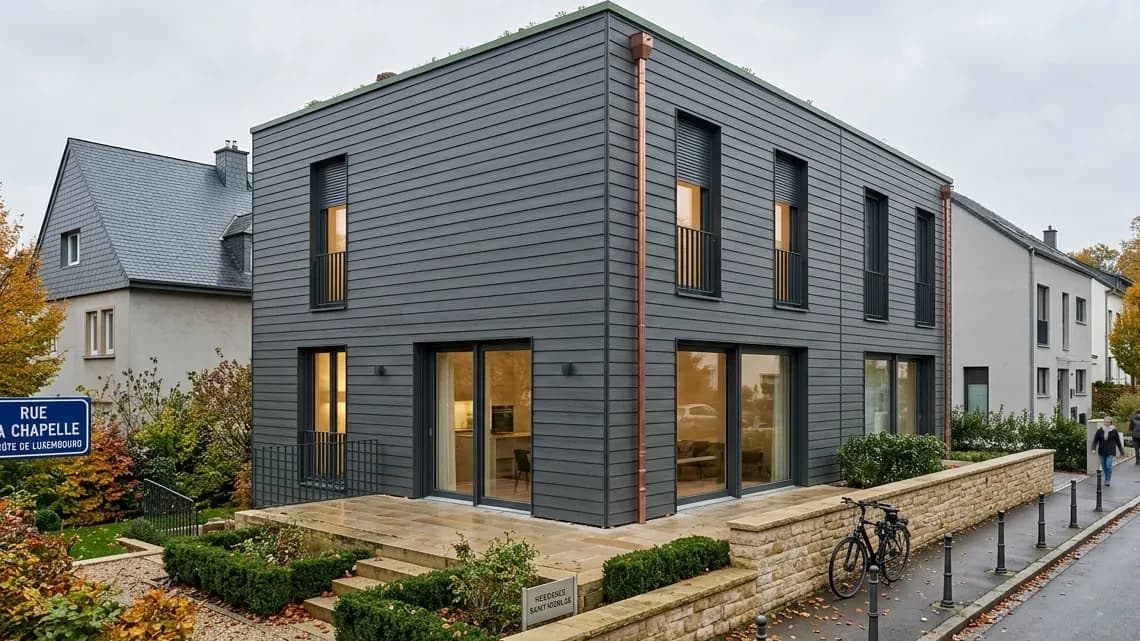
Over the past 20 years, fibre cement has become the benchmark for contemporary architectural facades. Made of Portland cement, mineral fibres and natural fillers, it is an extremely robust material — rot-proof, non-combustible (class A1 or A2-s1,d0) and available in a near-limitless design palette.
QUASART, based in Crauthem (L-3327), offers panels from the major European manufacturers (EQUITONE, RIEDER, ETERNIT, CEDRAL) and masters every fixing system — exposed, semi-concealed and fully concealed with clips.
Fibre cement offers an unrivalled range of finishes and textures. Each range has its own character.
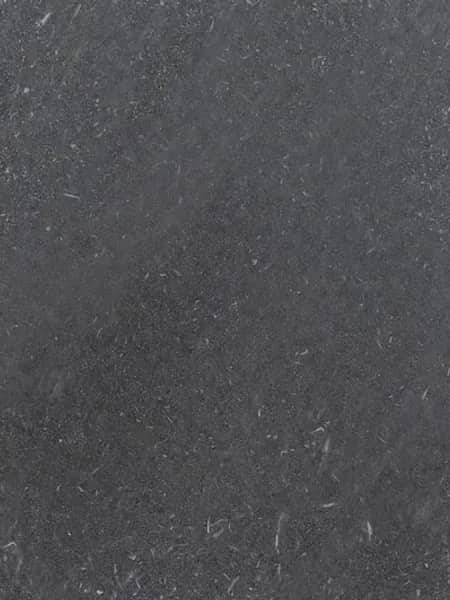 Raw
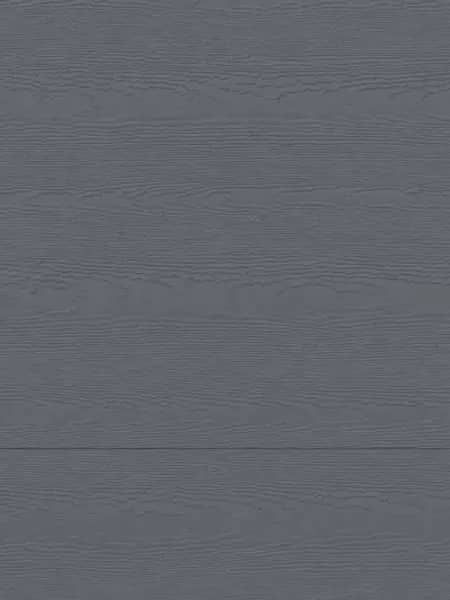 Wood
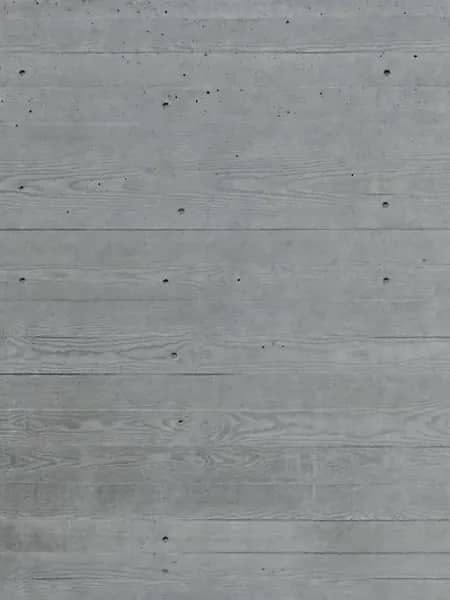 Concrete
QUASART works with the European leaders in fibre cement. Each manufacturer has its own positioning, formats and finishes.
The premium range from Etex Group. Raw through-coloured panels in formats up to 3,100 × 1,250 mm. Authentic mineral look, colour throughout the body. The benchmark for the most demanding institutional and commercial projects.
Glass Fiber Concrete panels (glassfibre-reinforced concrete) — ultra-thin (13 mm), exceptional strength, unique architectural finishes. RIEDER pushes the limits of fibre cement towards high-performance fibre concrete.
A benchmark for refurbishing existing facades and for multi-unit residential schemes. Wide range of colours and formats. Excellent value for money on large programmes.
Fibre cement planks that imitate wood with remarkable precision — grooved relief, wood texture, range of pre-coated colours. Zero maintenance, A2 rating. Ideal for detached houses seeking a wood look without the upkeep.
Formerly Eternit Switzerland. High-end fibre cement panels, colour throughout the body, matt and textured finishes. Widely specified by architects in the Benelux and Germany. XL formats up to 3,100 × 1,250 mm.
The classic solution on a timber or aluminium subframe. A4 stainless steel screws with EPDM sealing washers. Regular fixing grid, individual panels easy to replace. Economical for long runs.
Grooving on the back face of the panel. Concealed stainless steel clips allowing free thermal movement. Monolithic appearance, no visible element on the facade. Recommended for dark colours.
Horizontal installation system with concealed interlocking. Planks clipped onto aluminium rails. Fast installation with no visible screws. Ideal for detached houses and the refurbishment of rendered facades.
RIEDER fibre concrete panels require a specific fixing system calculated by the manufacturer’s engineering department. Each project has its own dedicated structural calculation.
Installing fibre cement demands rigorous management of thermal movement and panel layout.
Millimetre-accurate drawing before any order — panel positions, movement joints, corner junctions, cut-outs around openings. Approved with the architect.
Before ordering · Architect approvalSecondary subframe of aluminium T or L profiles, fixed to the masonry. Ventilated air gap of at least 20 mm. Vapour-permeable breather membrane over the insulation.
Aluminium · 20 mm air gap · Breather membraneCutting with a diamond blade or circular saw with dust extraction. Workshop drilling for exposed fixings. Never hammer drilling — the material is brittle in tension.
Diamond · Extraction · WorkshopJoints of 8 to 12 mm between panels depending on the installation temperature and the manufacturer’s recommendations. Backer rod + flexible sealant, or ventilated open joint.
8-12 mm · Sealant or openEvery QUASART installation complies with the standards in force in Luxembourg and Europe.
European standard defining the physical and mechanical properties of fibre cement sheets. Strength classes, water absorption, frost resistance. The reference for structural sizing.
Class A1 (non-combustible) or A2-s1,d0 (very limited contribution to fire). Allows use on high-rise buildings, public buildings and buildings subject to stricter fire requirements in Luxembourg.
ETAs specific to complete systems (panel + fixing + subframe). Each manufacturer holds its own ETAs, ensuring the CE conformity of the system.
International standard defining the characteristics of fibre-cement flat sheets. The basis for certification and type testing.
Ventilated fibre cement cladding is compatible with all thermal insulation types (EPS, stone wool, wood fibre). The ventilated air gap ensures thermal and hygrometric performance.
Villas and detached houses. CEDRAL for a maintenance-free wood look, EQUITONE for contemporary architectural projects.
Hospitals, nurseries, schools, shops. Euroclass A2-s1,d0 for EQUITONE Tectiva and Natura; RIEDER states class A1.
Buildings of 4 to 8 upper storeys. Panel layout in line with the building permit. Wide choice of colours for urban integration. ETERNIT Pictura or EQUITONE.
Fibre cement is installed as ventilated cladding on a secondary subframe fixed to the existing facade. External wall insulation (EWI) can be added at the same time.
Fibre cement is the chameleon of facades — it can be concrete, stone, wood or simply itself. It is absolute architectural freedom.QUASART — Material philosophy
Upload a photo and get a free technical diagnosis in 60 seconds: material, condition, signs of wear, recommendations. No sign-up required.
Start my diagnosisFrequently asked questions from clients and architects
No. Modern fibre cement products (EQUITONE, ETERNIT, RIEDER, CEDRAL) have contained no asbestos fibres since 1998. The panels are made of Portland cement, cellulose fibres and mineral fillers. European regulations have banned asbestos in all construction materials since 2005.
Yes, it is in fact one of the most common uses. Fibre cement is installed on a secondary subframe screwed to the existing facade, with a ventilated air gap. It is a very effective facade refurbishment solution, compatible with adding external wall insulation (EWI) at the same time.
EQUITONE is Etex’s high-end architectural range — large formats, raw industrial look, recommended for commercial and institutional buildings. CEDRAL is the residential range — cladding-format planks, wood imitation, pre-coated colours, more affordable.
Most are rated A1 (non-combustible) or A2-s1,d0 under EN 13501-1. This rating allows their use on high-rise buildings, public buildings and buildings with stricter fire requirements — notably multi-unit residential buildings in Luxembourg.
Exposed fixing (stainless steel screw + washer) is economical and allows individual panels to be replaced. Concealed fixing (undercut clips) gives a monolithic appearance with no screws on the surface, recommended for architectural projects and dark colours. The choice depends on the budget and the aesthetic requirements.
The cost depends on the range (CEDRAL is the most affordable, RIEDER the most premium), the fixing system and the complexity of the facade. QUASART provides a precise quote after studying your project.